

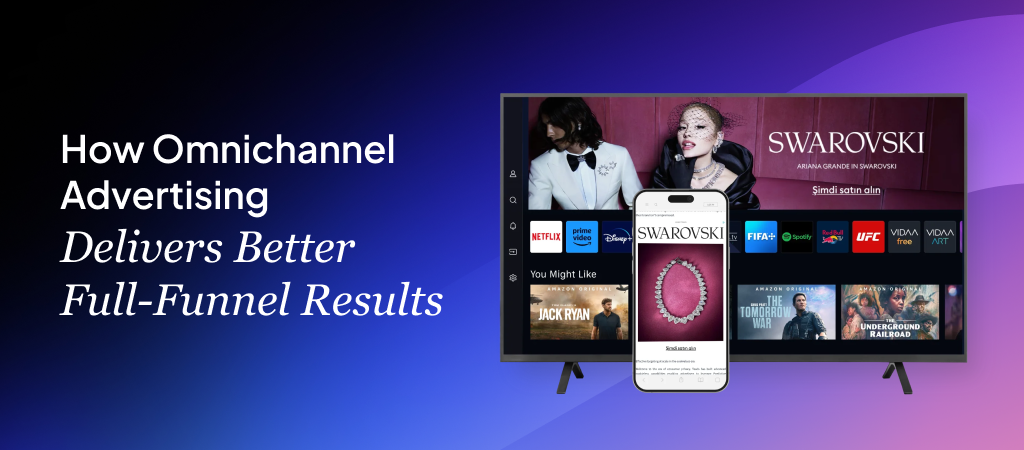
The Case for Omnichannel Advertising
Consumers don’t move through a purchase journey one channel at a time.
They discover brands on streaming TV, compare products on mobile, read reviews on premium publisher sites, receive recommendations on social media, and often convert days later from another device or in a physical store.
Marketing, however, often remains fragmented. Nielsen’s 2025 Annual Marketing Report found that only 32% of marketers globally say they measure their media spending holistically across both digital and traditional channels today.
Many campaigns are still planned and measured channel by channel, leading to fragmentation, duplicated reach, and inconsistent messaging. The result is wasted impressions, inefficient frequency, and an incomplete view of campaign performance. More importantly, it no longer reflects how consumers actually discover, evaluate, and purchase products today.
This disconnect is being accelerated by broader changes in the media landscape. Streaming has become mainstream, connected TV continues to grow, privacy regulations have reshaped audience targeting, and advertisers face increasing pressure to demonstrate measurable business outcomes, not just media delivery.
As audiences continue to fragment across connected TV, mobile, desktop, and other moments, creating connected experiences has become essential for maximizing media investment.
That’s where omnichannel advertising comes in. Unlike multichannel marketing, which simply distributes campaigns across multiple platforms, an omnichannel approach coordinates messaging, sequencing, frequency, and measurement around the consumer rather than the channel. The goal is to create a connected experience that reflects how people actually engage with brands while maximizing the effectiveness of every media investment.
Why Omnichannel Advertising Performs Better
Adding more channels doesn’t automatically improve campaign performance. What drives better results is ensuring those channels work together as a coordinated experience.
Each environment plays a distinct role within the consumer journey. Connected TV captures attention in high-impact, lean-back viewing moments, premium publisher environments encourage deeper engagement while audiences actively consume content, and mobile and desktop create opportunities for continued interaction and conversion.
Together, these touchpoints reinforce a consistent brand story instead of delivering isolated impressions across disconnected channels.
Industry researches, including WARC’s reports, has consistently shown that coordinated cross-screen campaigns outperform siloed media strategies by improving incremental reach, strengthening message recall, and creating more meaningful customer experiences.
Teads’ own research demonstrates this in practice. Compared with audiences exposed through only one medium, consumers reached across multiple screens generated stronger improvements in key brand metrics, including opinion, perception, and consideration.
Additional brand lift research showed similar results when audiences experienced coordinated campaigns across multiple media instead of a single environment.
- Brand awareness increased from +8% to +13%
- Ad recall improved from +37% to +50%
- Purchase intent rose from +13% to +32%
Delivering an omnichannel strategy, however, requires more than simply buying inventory across multiple channels. It depends on consistent creative, coordinated audience management, frequency optimization, and cross-screen measurement that connects every touchpoint to business outcomes. The following campaigns illustrate how brands have applied these principles across different objectives and industries.
Omnichannel Success Stories Across the Full Funnel
Building Awareness Across Connected TV and Premium Media
For awareness campaigns, success depends on reaching consumers in moments where attention is naturally high.
Swarovski partnered with Publicis and Teads to launch an omnichannel campaign ahead of the holiday retail season.
Creative assets across CTV HomeScreen, InStream and InRead were optimized specifically for each environment through Teads Studio, while independent studies measured both attention and brand lift.
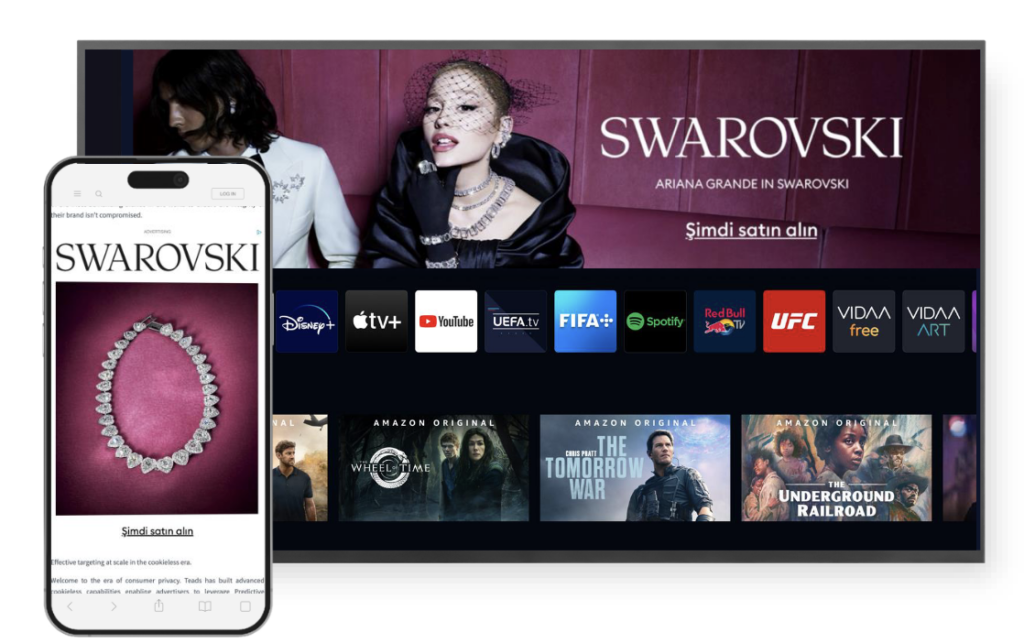
The campaign achieved:
Aided ad recall
Brand attribution
Improvement in brand image
Attention versus benchmark
Rather than maximizing impressions alone, the strategy maximized memorable exposure across complementary touchpoints.
Creating Connected Experiences Across Every Screen
Omnichannel campaigns also create opportunities to optimize performance while they’re running. By combining cross-screen delivery with creative testing, audience insights, and brand measurement, advertisers can understand not only whether a campaign worked, but why it worked—and use those learnings to improve future activations.
Renault Turkey embraced this approach during the launch of the new Duster e-Tech Full Hybrid. Working with Teads, the brand deployed an omnichannel campaign that combined CTV InStream and InRead placements, with creatives optimized through AI pre-testing and Teads Studio specifically for high-attention environments. The campaign also incorporated a Kantar Brand Lift study to measure how different audience segments responded to the campaign.
The results demonstrated the value of combining cross-screen reach with audience insights. The campaign delivered:
Total impressions
CTV completion rate
Ad recall vs. benchmark
Brand awareness vs. benchmark
Favorability vs. benchmark
Rather than simply extending reach across multiple screens, Renault used an omnichannel strategy to optimize creative, validate audience targeting, and measure brand impact throughout the campaign.
Connecting Brand Awareness to Business Outcomes
Omnichannel advertising isn’t limited to awareness. It also creates measurable pathways from discovery to conversion.
Pipedrive partnered with Assembly Global and Teads to scale customer acquisition across the US, UK, and Australia.
The campaign combined:
- InRead video for premium editorial discovery
- CTV Performance to connect television exposure with web behavior
- Native Feed placements to encourage sign-ups
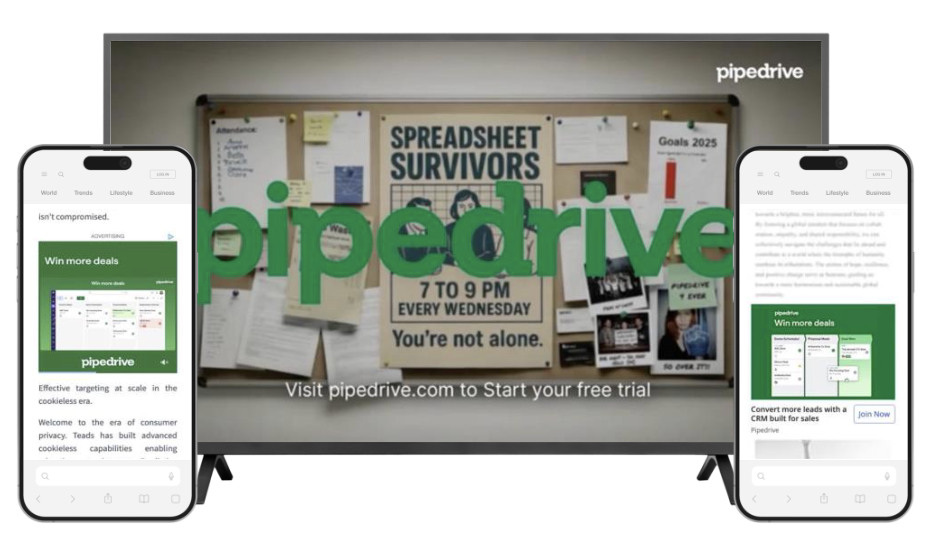
Independent incrementality measurement by Kochava demonstrated that the coordinated strategy delivered:
Total sign-ups
Incremental registrations
Incrementality coefficient
Lower true cost per sign-up
Lift in overall registrations
Rather than evaluating each channel independently, the campaign measured how every touchpoint contributed to the final business outcome.
The Future of Full-Funnel Advertising Is Omnichannel
Marketing success is becoming less about optimizing individual channels and more about orchestrating connected consumer experiences.
The strongest campaigns aren’t built around connected TV alone, premium publishers alone, or mobile alone. They combine each environment to maximize attention, reinforce messaging, improve measurement, and guide consumers naturally from awareness through consideration to conversion.
As these success stories demonstrate, omnichannel advertising enables brands to move beyond isolated media performance and measure what matters most: business outcomes.
Whether the objective is increasing brand awareness, improving recall, generating qualified website visits, or driving incremental conversions, coordinated campaigns consistently outperform disconnected ones.
For advertisers planning their next campaign, the question is no longer which channel works best. It’s how effectively those channels work together.
Bringing Omnichannel Advertising Together
Consumers already experience brands across multiple screens. The opportunity for advertisers is to make those experiences feel connected.
The campaigns featured here (and in our case study repository) show that omnichannel advertising isn’t simply about adding more media placements. It’s about orchestrating each touchpoint so every impression builds on the last, from awareness and consideration through engagement and conversion.
That’s the principle behind Teads’ omnichannel approach. By combining premium media, connected TV, cross-screen audience intelligence, creative optimization, and outcome-based measurement in a single platform, brands can plan, activate, and measure campaigns as one connected experience rather than a collection of isolated channels.
Whether you’re introducing a new brand, launching a product, or driving measurable business growth, an integrated omnichannel strategy helps every screen contribute to a larger customer journey, not just an isolated media buy.
Ready to create omnichannel campaigns that deliver measurable full-funnel results?
Get in touch with our team to see how Teads can help connect every screen, every moment, and every outcome.