

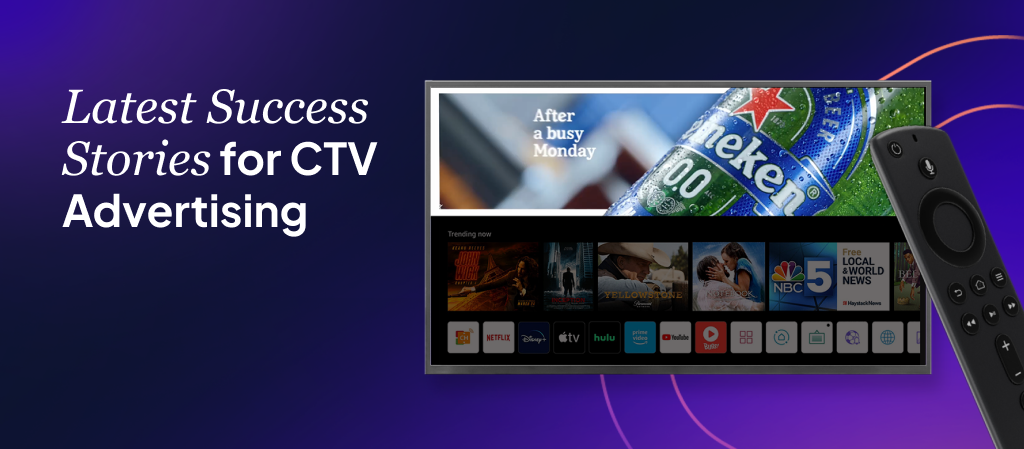
For years connected TV (CTV) advertising was measured in impressions and completion rates. Those metrics told you something, but they left a lot unanswered. Did anyone remember the ad? Did they engage? Did exposure drive real business outcomes?
Today, connected TV advertising is delivering measurable results across the full funnel. From brand awareness and consideration to site traffic and sales lift, campaigns running on the Teads platform are proving that CTV can be both impactful and accountable.
Here’s what recent campaigns reveal about where connected TV advertising is headed.
CTV HomeScreen Advertising Is Setting New Attention Benchmarks
Our CTV HomeScreen format places brand creative on the first screen viewers see when they power on their smart TV. Audiences are actively deciding what to watch, which makes it one of the highest-attention moments in the streaming experience.
A study with the MediaMento Institute measured exactly how powerful that moment can be. HomeScreen video ads achieved a 48% attention rate, outperforming skippable pre-roll by 16%. Three-dimensional creative formats captured attention 29% faster and held it significantly longer. Unaided recall hit 50%, aided recall reached 84%, and 80% of exposed viewers said the ads enhanced brand value.
More than 1,500 CTV HomeScreen campaigns have run on our platform since launch, with brands like Cartier, Nestlé, Air France, and Nissan all using these CTV ads to build impact at scale.
Air France placed the airline on the first screen viewers saw when turning on their TVs, targeting a new audience in a premium content discovery environment. A brand lift study with Cint/Lucid measured a 22% increase in recommendation intent.
Nestlé ran a “Perfect Combination” omnichannel campaign combining CTV HomeScreen with InRead formats, achieving 100% viewability on CTV placements, a 96.88% video completion rate, and a 9% lift in ad recall.
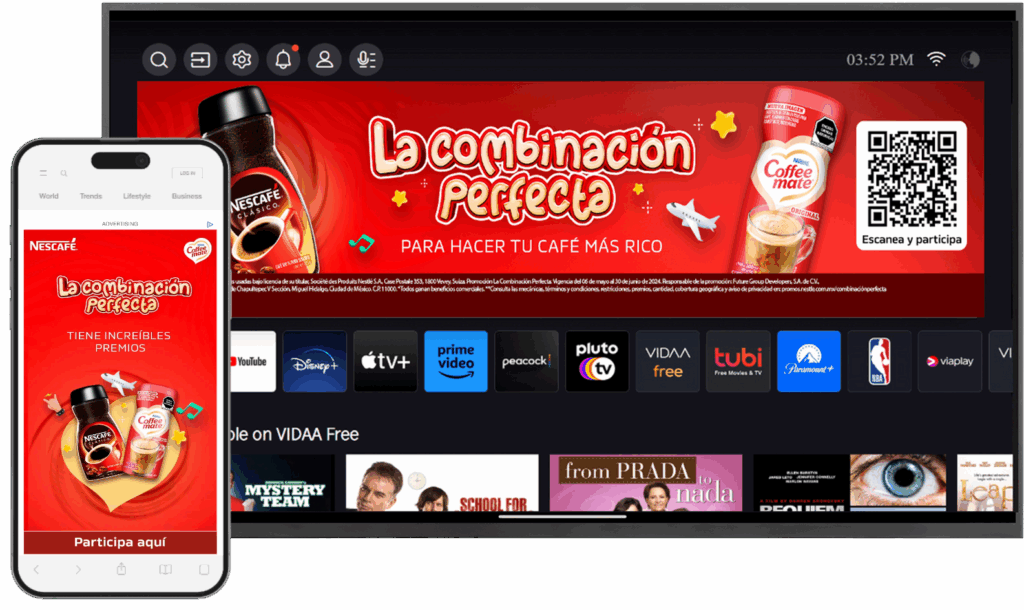
Cartier launched its first 3D CTV HomeScreen campaign and generated over 12 million impressions across premium smart TV inventory.
These campaigns demonstrate how premium placement, attention, and format innovation can elevate brand performance in connected TV environments.
Connected TV Advertising Campaigns Driving Real Mid-Funnel Results
The more interesting shift is what’s happening beyond awareness. A growing number of CTV campaigns are now optimized for mid-funnel outcomes like site visits, engagement, and in-store traffic.
Men’s Wearhouse ran a CTV Performance campaign incorporating QR codes and interactive formats during key retail moments. The campaign drove 41,000+ site visits and 8,000 add-to-carts, with visitors spending an average of 2 minutes and 17 seconds on site after scanning. Click-through rates hit 0.54%, 170% above benchmark. Beyond the screen, the campaign also generated over 50,000 store visits, representing a 14.4% incremental lift.

Travel Texas used CTV targeting based on contextual signals around travel, lifestyle, and sports to reach high-intent out-of-state audiences. Within 30 days of exposure, the campaign delivered 2,800+ incremental site engagements and a 4.4% increase in visits per viewable household, with visitors averaging nearly two minutes on site.
Feu Vert, a European automotive services brand, used our CTV Performance solution to drive site visits and product exploration. The campaign achieved an average cost per visit of €0.58, a 14% bounce rate, and visitors viewing an average of 3 pages per session across more than 3 minutes on site.
Creative Science: What Heineken’s CTV HomeScreen Study Revealed
Beyond individual campaign results, structured creative testing is helping advertisers understand why certain CTV formats perform better.
In partnership with Heineken and Strat7, Teads conducted a multi-market creative study focused exclusively on the CTV HomeScreen environment. The objective: understand how format, length, and execution influence upper-funnel brand outcomes.
The findings were decisive. Across multiple European campaigns, Heineken’s HomeScreen activity delivered a 2.3× uplift in ad awareness versus brand norms.
The study also revealed three critical creative principles:
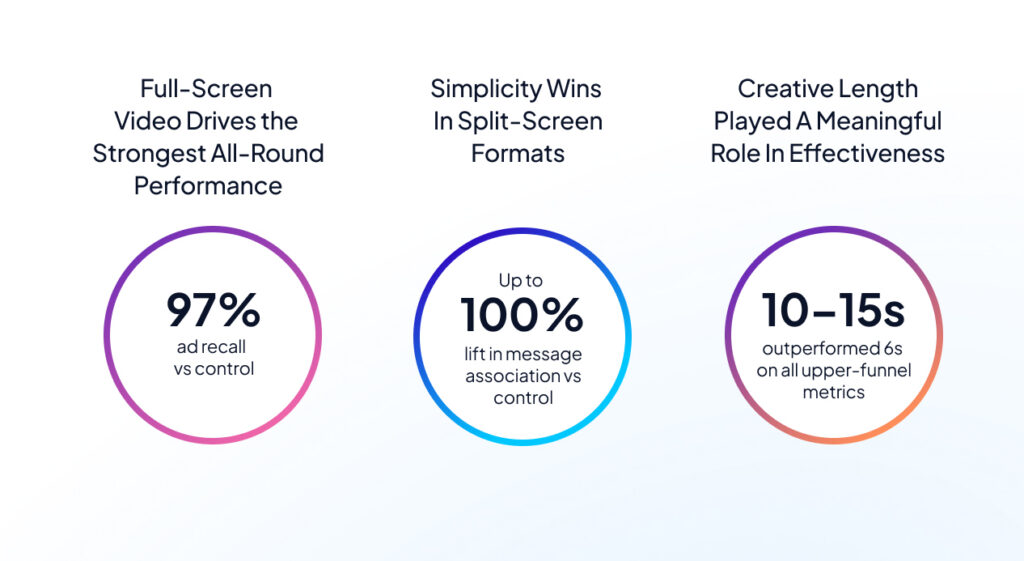
What stands out from the Heineken study is how much creative decisions shaped the results. Targeting gets most of the attention in CTV planning conversations, but format, length, and execution had a measurable effect on whether people actually remembered the brand. That’s where Teads Studio creative experts shine, working with advertisers to build CTV creative that’s designed around these kinds of insights from the start.
Omnichannel CTV Campaigns That Connected Exposure to Sales
The strongest results tend to come from campaigns that pair CTV with cross-screen retargeting and sequential creative, connecting what someone sees on the big screen with what they encounter on mobile or web afterward.
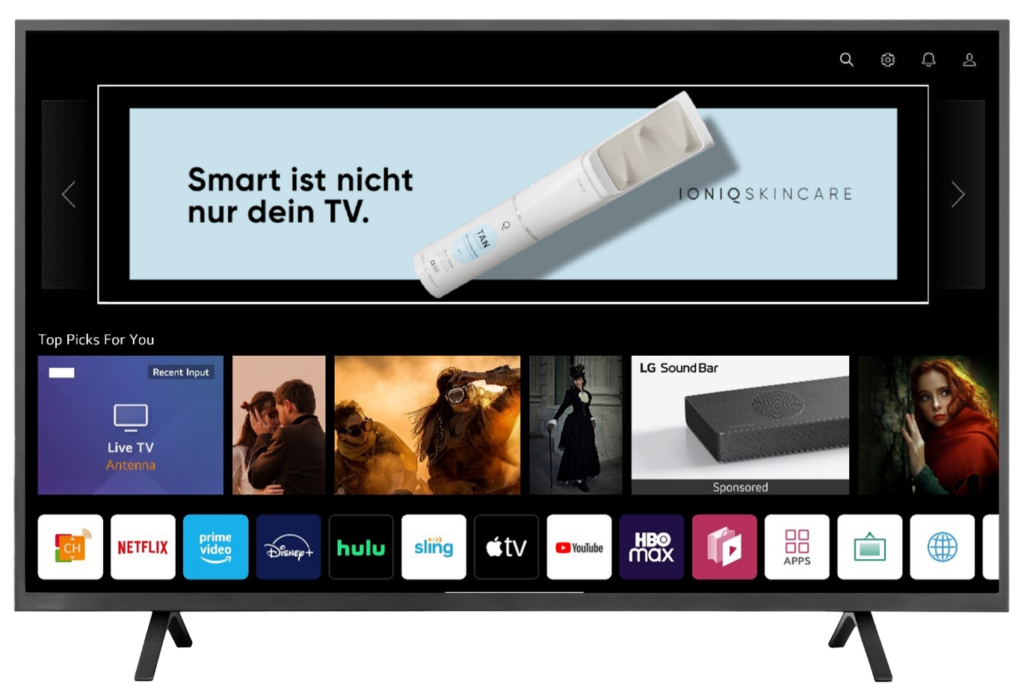
IONIQ Skincare paired CTV HomeScreen with InRead retargeting to measure whether upper-funnel exposure improved lower-funnel efficiency. Audiences previously exposed on CTV showed a 38.5% higher click-through rate and a 16.3% lower cost per click in the retargeting phase, with bounce rates and engagement improving across the board. The campaign delivered a 6% incremental sales lift and a higher average order value.
Finanzguru, a personal finance app, ran a CTV Performance campaign to drive app registrations among 25-to-40-year-olds with financial interest. Instead of directing viewers to the app store, the campaign sent them to a dedicated landing page. It drove 410+ registrations, a 17% lower bounce rate versus site benchmarks, 47% more time spent on site, and a 27% higher customer lifetime value compared to users acquired from other channels. The CTV audience engaged more deeply and converted at higher value.
What These CTV Advertising Results Prove
Across all of these campaigns, the common factor is CTV measurement infrastructure that connects exposure to outcomes. Through tools like the Teads Universal Pixel, household-level attribution, and controlled A/B testing, advertisers can track the relationship between a CTV impression and what happens next, with a precision that keeps improving.
For media buyers evaluating where to put their next dollar, the evidence from these CTV advertising campaigns is straightforward. The right combination of CTV ad formats, creative, and measurement makes the channel accountable in ways it simply wasn’t two years ago. And the brands building that capability now are seeing it pay off across the funnel.
Want to see what these kinds of results could look like for your brand? Get in touch with our team.