

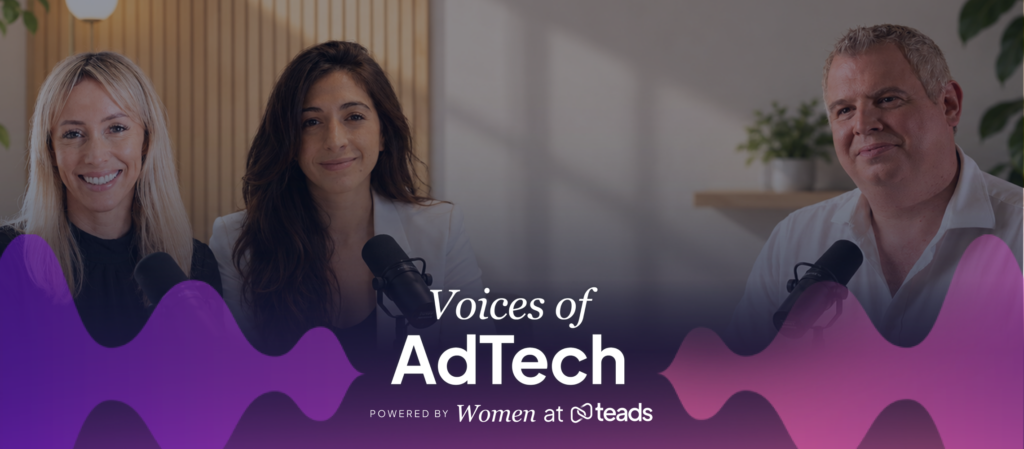
In the latest episode of Voices of AdTech, I was joined by Jamie Toward and my co-host Amy China Wire to explore how AI is changing the way we work, and why curiosity might be one of the most valuable skills we can develop. Jamie has spent more than 30 years in advertising, experiencing the industry’s evolution from traditional media to digital and now artificial intelligence. Yet his AI journey started less than a year ago, with a simple decision to try something different.
While working on a project involving 11 markets, Jamie decided to experiment with AI. The first part of the project had taken him approximately five days using his usual methods. For the second part, he gave AI a try and completed the work in around five hours. Although the tasks were different, the experience changed how he approached his work. Today, he’s building AI agents, automating repetitive tasks, and finding new ways to help colleagues work more efficiently. And perhaps most interestingly, he has no formal AI or engineering background.
One of my favorite parts of our conversation was Jamie’s perspective on learning. As professionals, we’re often expected to know what we’re doing, and admitting that we don’t have all the answers can feel uncomfortable. But learning AI requires us to become beginners again, to experiment, make mistakes, and accept that we won’t always get things right the first time. Jamie captured this perfectly when I asked what skills would help people thrive in the AI era: “Think logically, but play like children.”
We also discussed something particularly relevant for organizations: How do we create the conditions for people to experiment? Jamie shared how his manager encouraged him and gave him time to explore AI, while Amy reflected on how curiosity and the willingness to try new things can make a real difference. At Teads, initiatives like PowerUp and Teadsruptors are helping colleagues develop their AI capabilities, explore new tools, and apply what they learn to their everyday work. Hearing Jamie and Amy’s experiences reminded me how important it is to give people opportunities to learn, especially when technology is evolving so quickly.
And if there’s one practical takeaway from this conversation, it’s Jamie’s one-hour challenge. Set aside an hour each week to experiment with AI. Think about the task you dislike most in your job, the repetitive process or the work that takes more time than it should, and ask AI how it could help you do it differently. You don’t need to know the solution before you start. Sometimes, the most valuable learning comes from simply trying.
What stayed with me after this conversation is that adapting to AI is as much about how we approach learning as it is about technology itself. Curiosity, experimentation, and the willingness to challenge how we’ve always worked can open up opportunities we hadn’t considered before.
🎧 Listen to the full conversation with Jamie Toward and Amy China Wire on [Voices of AdTech, powered by Women@Teads]
If you work at Teads, join our #ai_for_all community to stay up to date on AI initiatives, discover learning opportunities, and exchange ideas and experiences with colleagues.
Alejandra Herrera is the Inclusion & Sustainability Manager at Teads, where she leads initiatives that connect inclusive workplace cultures with innovation, leadership, and business performance. With a background in organizational science, political science, and communication, she is passionate about understanding how people and organizations navigate change. She is also the host of Voices of AdTech, a podcast powered by Women@Teads that brings forward conversations about the people, ideas, and experiences shaping the advertising technology industry.